
Garlic Butter Salmon Recipe for Easy Delicious Dinner
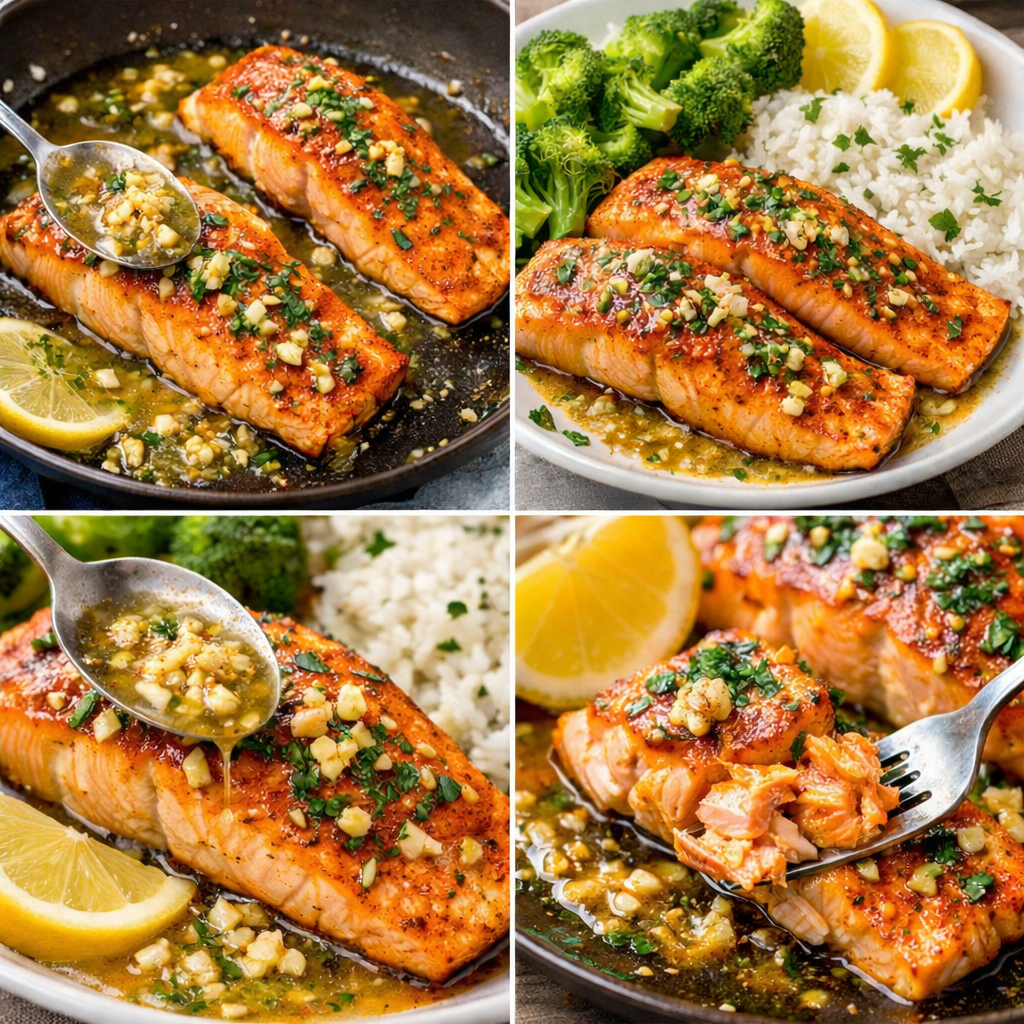
You can make a restaurant-quality Garlic Butter Salmon at home in under 30 minutes. This garlic butter salmon recipe pairs rich, savory butter and garlic with the natural richness of salmon to create a balanced, flavorful dish that works for a quick weeknight meal or a special dinner.
This easy salmon recipe focuses on homemade garlic butter and simple steps so you get consistent results. You’ll learn how to pan-sear and finish in the oven, which keeps the salmon moist while building a golden crust.
The article is written for U.S. home cooks who want healthy, simple seafood meals. You’ll find guidance on ingredients, choosing fresh salmon, timing and temperature, variations, side dishes, presentation, and storage to make this quick salmon dinner repeatable and satisfying.
Key Takeaways
- Ready in about 30 minutes for an easy salmon recipe that fits weeknights.
- Homemade garlic butter elevates flavor without extra fuss.
- Pan-sear then oven-finish for moist, restaurant-style results.
- Simple ingredient list and straightforward technique suit home cooks.
- Pairs well with vegetables, grains, or a crisp salad for a complete meal.
Why Garlic Butter Salmon Is a Perfect Easy Salmon Recipe
This dish fits your weeknight routine. Garlic butter salmon cooks quickly, often in 10–15 minutes total. Prep is minimal. You will use pantry staples like butter, garlic, lemon, and fresh herbs to build flavor with little fuss. A quick pan-sear with a short oven finish or a stove-top method gives reliable results for a quick salmon dinner.
Quick weeknight dinner solution
When time is tight, this recipe saves the night. You can have a restaurant-style plate ready while vegetables roast or rice cooks. The method works with fillets, steaks, or skin-on pieces. Simple tools and predictable timing mean you get a satisfying quick salmon dinner without stress.
Health benefits of salmon and simple preparation
Salmon brings omega-3 fatty acids EPA and DHA, high-quality protein, vitamin D, and B vitamins to your plate. Cook it gently to preserve nutrients. Pan-searing and brief oven time maintain texture and vitamins better than long, high-heat cooking. Use modest amounts of butter to keep flavor but pair the fish with vegetables and whole grains for one of the healthy salmon dishes you can feel good about.
Flavor profile: homemade garlic butter and complementary herbs
The base is straightforward: unsalted butter or a butter-olive oil blend, freshly minced garlic, lemon juice or zest, and herbs like parsley, dill, or chives. Acid from lemon cuts richness while salt lifts the natural taste of the fish. Herbs add brightness and a fresh finish. For variation, try a touch of Dijon mustard, red pepper flakes, or capers to tweak the balance and keep this homemade garlic butter exciting across meals.
Garlic Butter Salmon
This part gives you a clear ingredients list, smart market tips, and simple swaps so you can make garlic butter salmon at home with confidence. Use these notes to build a reliable grocery list and pick the best cut for your seafood dinner ideas.
Ingredients list for the salmon and garlic butter sauce
For four servings, gather:
- Salmon fillets, 6–8 oz each
- Unsalted butter, 4 tbsp
- Fresh garlic, 3–4 cloves, minced
- Lemon, juice and zest
- Fresh parsley or dill, 1–2 tbsp chopped
- Salt and freshly ground black pepper
- Olive oil, 1–2 tbsp for searing
- Optional: white wine or chicken broth, 2 tbsp
- Optional: Dijon mustard, 1 tsp
- Optional: red pepper flakes or capers to taste
Pantry swap options: use ghee or clarified butter for higher smoke point, garlic powder if fresh cloves aren’t available, or lemon pepper seasoning in place of fresh lemon for convenience. These swaps keep your homemade garlic butter sauce flexible for different kitchens.
Tips for choosing fresh salmon at the store or market
Look for firm flesh that springs back when pressed. A moist, not slimy, surface and minimal fishy odor point to quality. Color varies by species; choose the hue that matches the texture you want.
For skin-on pieces, the skin should look shiny and intact. If possible, buy from reputable retailers like Whole Foods, Trader Joe’s, or a local fishmonger that lists catch date and source. Wild-caught sockeye or Coho gives a deeper color and firmer bite. Farmed Atlantic is often more affordable and consistently available.
If fresh isn’t available, consider frozen flash-frozen or frozen-at-sea options. Those retain texture and flavor and can be a smart choice for reliable seafood dinner ideas.
Variations: skin-on vs. skinless, fillets vs. steaks
Skin-on fillets crisp nicely when seared and help hold the flesh together. If you like a crunchy edge, keep the skin. If you prefer easier plating, choose skinless for clean presentation.
Fillets cook faster and suit single servings. Steaks are thicker, often bone-in, and take longer to cook through but heat more evenly. Scale your ingredient amounts and add a few extra minutes of cooking for thicker pieces. If you leave skin on, factor in a slightly longer sear to get that crisp texture.
Dietary notes: fish skin contains omega-3s and extra nutrients. Remove it if texture or personal preference demands. Adjust seasoning and the homemade garlic butter sauce volume to match portion size and thickness.
Step-by-Step Cooking Method for a Flavorful Salmon Recipe
Start with clear steps so your quick salmon dinner turns out moist and delicious. Below you will find a simple flow: make the homemade garlic butter, sear the fillets, and finish to the right temperature. Each part is short and actionable to help you get dinner on the table fast.
Preparing the homemade garlic butter sauce
Soften unsalted butter at room temperature for easy mixing. Mince garlic finely and prepare lemon zest, lemon juice, chopped parsley or dill, salt, and pepper.
Warm a small skillet over low heat and add a knob of butter. Add garlic last if the butter is already hot to avoid browning. Sauté until fragrant, about 30–60 seconds. If you prefer, melt butter off-heat and stir in garlic to prevent any bitterness.
Whisk in lemon juice, zest, herbs, and an optional splash of white wine or Dijon mustard to make the sauce glossy. Taste and adjust salt. Keep the sauce warm while you pan-sear the fish.
Pan-searing and oven-finishing technique for moist salmon
Pat salmon dry with paper towels and season with salt and pepper. Preheat your oven to 400°F (204°C). Use a nonstick skillet or a well-seasoned cast-iron pan that is oven-safe.
Heat the skillet over medium-high with a little olive oil until shimmering. Place fillets skin-side up to render fat, searing 2–3 minutes until the top is golden. Flip and sear the skin-side 1–2 minutes to crisp the skin.
Spoon the homemade garlic butter over each fillet. Transfer the skillet to the preheated oven for 5–8 minutes depending on thickness. If you don’t have an oven, cover the pan, reduce heat to medium-low, and finish on the stovetop. Use oven mitts when handling the hot skillet.
Timing and temperature guidelines for perfectly cooked fish
For safety, the USDA recommends 145°F (63°C). Many chefs aim for 125–130°F (52–54°C) for medium salmon that stays moist. Carryover cooking will raise the internal temp during the 3–5 minute rest.
Use an instant-read thermometer at the thickest part of the fillet. A good rule of thumb is about 10 minutes total per inch of thickness. Most fillets finish in 6–12 minutes from the first sear to plated.
Look for visual cues: the center should be opaque and flake easily with a fork while retaining a slight gloss. Rest the fish briefly, spoon another touch of garlic butter over the top, and serve as part of your favorite flavorful salmon recipes for a satisfying quick salmon dinner.
Serving Suggestions and Simple Seafood Meals
Pairing your garlic butter salmon with smart sides turns a weeknight dinner into a memorable meal. Use quick vegetables and grains that finish around the same time as the salmon for stress-free timing. These ideas fit both simple seafood meals and more elevated dinner plans.
Side dishes that pair well (vegetables, grains, salads)
Roasted or steamed asparagus works well with a squeeze of lemon and a pinch of flaky sea salt. Sautéed green beans with garlic take five to eight minutes; toss them in the pan while the salmon rests. Garlic or lemon broccoli can be roasted at 425°F for 12 minutes to match oven-finished salmon.
Mash or roast potatoes for a classic base. For lighter grains, cook quinoa, rice pilaf, or farro and season with olive oil, lemon, and chopped herbs. A simple green salad with vinaigrette or a Mediterranean tomato-cucumber salad adds bright acidity. Lemony couscous makes a fast, fluffy side that pairs with healthy salmon dishes.
Presentation tips to make your dinner feel elevated
Plate the salmon slightly off-center and spoon warmed garlic butter over the top to catch the eye. Garnish with lemon wedges and finely chopped parsley or microgreens. A light sprinkle of Maldon sea salt and cracked black pepper finishes each fillet.
Warm plates before serving to keep food hot. For casual meals, serve family-style on a wooden board. For a refined look, plate individually with a small swipe of yogurt-dill or tzatziki on the side. Pair with a crisp Sauvignon Blanc, oaked Chardonnay, or a light rosé to complement delicious fish recipes.
Make-ahead and storage tips for quick salmon dinner leftovers
Cool cooked salmon to room temperature, no longer than two hours, then store airtight in the refrigerator for up to three days. Freeze portions wrapped tightly for up to two months to preserve quality.
Reheat gently in a 275°F (135°C) oven covered with foil for 10–15 minutes to retain moisture. You can reheat in a skillet over low heat with a splash of water or extra garlic butter to prevent drying. Repurpose leftovers into salads, tacos, pasta, or grain bowls for simple seafood meals all week.
| Side | Prep Time | Best With | Notes |
| Roasted Asparagus | 10–12 min | Healthy salmon dishes | Lemon zest and olive oil; roast at 425°F with salmon finishing |
| Sautéed Green Beans | 6–8 min | Simple seafood meals | Garlic and butter; toss in skillet as salmon rests |
| Garlic or Lemon Broccoli | 10–12 min | Seafood dinner ideas | Roast or steam; finish with lemon and red pepper flakes |
| Quinoa / Farro | 15–20 min | Delicious fish recipes | Cook in broth, stir in herbs and lemon for brightness |
| Mashed or Roasted Potatoes | 30–40 min | Comfort-style salmon meals | Roast for crispy edges, mash with butter and chives |
| Tomato-Cucumber Salad | 10 min | Light, fresh plates | Olive oil, red wine vinegar, parsley or mint |
Conclusion
Garlic butter salmon shines as an easy salmon recipe that delivers big flavor with minimal fuss. The homemade garlic butter sauce lifts simple fillets into restaurant-quality fish, while the pan-sear plus oven-finish method keeps the flesh moist and flaky. This dish is fast, nutritious, and flexible enough for weeknights or a special dinner.
To get started, gather quality salmon from your market, butter, garlic, and a few staple herbs. Follow the sear-and-bake technique and use an instant-read thermometer to hit the perfect doneness. Scale the recipe for two or a family, swap herbs to suit your tastes, and pair the fish with grains, roasted vegetables, or a crisp salad for a balanced meal.
Save this quick salmon dinner idea and share it with friends who like simple seafood meals. Try variations—add capers, Dijon mustard, or parsley—to create other flavorful salmon recipes from the same base. With basic pantry items and a reliable method, you’ll have a repeatable garlic butter salmon recipe that elevates your weeknight routine.
FAQ
How long does garlic butter salmon take to cook?
Total active time is typically under 30 minutes. Pan-searing takes about 3–5 minutes, then a 5–8 minute oven finish at 400°F (204°C) depending on thickness. Follow the 10 minutes per inch rule as a guideline and use an instant-read thermometer—125–130°F (52–54°C) for medium, up to 145°F (63°C) if you prefer fully cooked fish. Rest 3–5 minutes before serving.
What ingredients do I need for the homemade garlic butter sauce?
You’ll need unsalted butter (or ghee/clarified butter), 3–4 cloves fresh garlic (minced), lemon juice and/or zest, 1–2 tablespoons chopped parsley or dill, salt, and freshly ground black pepper. Optional additions include 1–2 tablespoons white wine or chicken broth, 1 teaspoon Dijon mustard, red pepper flakes, or capers. Olive oil is used for searing.
Should I buy skin-on or skinless salmon?
Skin-on fillets crisp nicely when seared and help the fillet stay intact during cooking. Skinless is easier to plate and serve. Choose skin-on if you want texture and slightly more protection from overcooking; choose skinless for convenience. For steaks, allow extra cooking time due to greater thickness.
How do I choose fresh salmon at the store or market?
Look for firm flesh that springs back, a moist but not slimy surface, and a mild, sea-fresh smell. Color varies by species; avoid dull or brownish edges. For reliable sourcing, shop at reputable retailers like Whole Foods, Trader Joe’s, or local fishmongers that list catch date and origin. Frozen flash-frozen (frozen-at-sea) is a high-quality alternative.
Can I make the garlic butter sauce ahead of time?
Yes. Make the garlic butter sauce up to 24 hours ahead and store in an airtight container in the refrigerator. Reheat gently on low so the garlic doesn’t burn and whisk to re-emulsify. For best flavor, add a fresh squeeze of lemon and a sprinkle of fresh herbs just before serving.
What’s the best pan and technique for pan-searing and oven-finishing salmon?
Use an oven-safe skillet—nonstick or well-seasoned cast iron works well. Preheat the skillet over medium-high with 1–2 tablespoons olive oil. Pat salmon dry, season, and sear skin-side up first for 2–3 minutes, flip to crisp the skin 1–2 minutes, spoon garlic butter over the fillets, then transfer to a 400°F oven for 5–8 minutes depending on thickness. Use oven mitts and an instant-read thermometer for accuracy.
Is garlic butter salmon healthy?
Yes. Salmon is rich in omega-3 fatty acids (EPA and DHA), high-quality protein, vitamin D, and B vitamins. Using modest butter keeps flavor while maintaining a healthy profile, especially when paired with vegetables and whole grains. You can swap clarified butter or use a butter–olive oil blend to adjust fat profile.
How do I prevent garlic from burning in the sauce?
Cook garlic over low to medium heat and add it toward the end of melting the butter. Alternatively, melt butter off the heat and stir in the minced garlic so it softens without browning. Burnt garlic becomes bitter, so keep the heat gentle and watch it closely—30–60 seconds until fragrant is usually enough.
What sides pair best with garlic butter salmon?
Pair with roasted or steamed asparagus, garlic or lemon broccoli, sautéed green beans, mashed or roasted potatoes, quinoa, farro, or rice pilaf. A simple green salad or Mediterranean tomato-cucumber salad also complements the richness. Light sauces like yogurt-dill or tzatziki add refreshing contrast.
How should I store and reheat leftover salmon?
Cool cooked salmon to room temperature for no more than 2 hours, then refrigerate in an airtight container for up to 3 days. Freeze portions for up to 2 months. Reheat gently in a 275°F (135°C) oven covered with foil for 10–15 minutes, or warm in a skillet over low heat with a splash of water or extra garlic butter to maintain moisture. Leftovers are excellent in salads, tacos, pasta, or grain bowls.
Can I adapt this recipe for larger families or meal prep?
Yes. Scale ingredients proportionally—6–8 oz salmon per person is a common portion. For thicker steaks or bone-in pieces, increase oven time. Consider cooking multiple fillets in a large skillet or roast several on a baking sheet; adjust timing and check internal temperatures. Make extra garlic butter to drizzle over rice, grains, or vegetables throughout the week.
What variations can I try to change the flavor profile?
Try adding Dijon mustard to the garlic butter for tang, capers for briny notes, or red pepper flakes for heat. Swap parsley for dill or chives, add lemon zest for brightness, or finish with a splash of white wine. A soy-ginger twist or herb pesto can also pair well for different cuisines.